-
Sarah Burton, Fisheries Intern - total reports: 8
- View all reports by Sarah Burton →
posted on: June 11, 2012
Surveying Eels on the Sassafras River
Type: Tidal
Region: North Eastern
Location: Sassafras River
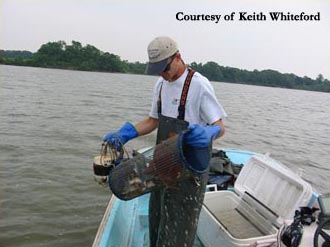
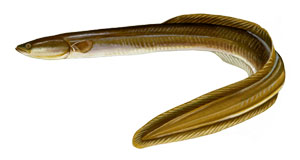
My first week working at the Fisheries Service at the Maryland DNR, I was surprised with an invitation to join Keith Whiteford and Matt Rinehimer in their field work to collect american eels trapped in pots set out on the Sassafras River near the Sassafras River Marina. This was part of a survey dating back to 1980, reviewing the eel's size and abundance in the area. Keith and Matt explained that eels are actually a large export on the East Coast. Though culturally most Americans do not eat eel, it's a popular food in Europe and especially in Japan. As an impact of the tsunami in Japan, the price of eels has skyrocketed. This is especially true for glass eels, or eels which are just two or three inches long.
The eels that we collected from the 30 pots were mostly around ten to twelve inches or so by my estimate. They were skinnier, smaller, and lighter in color than I expected, as I went in with the typical image of big, nasty eels from movies. These guys instead were relatively harmless, as they hardly ever bite with their sandpaper-like teeth. The worst these creatures can do is leave a slime on your hands and fishing line. Keith, after we pulled in the first pot with about five eels, suggested that I reach into the cooler full of water to touch them. At first, I was nervous but I reached in and let a few eels slide through my hands. They were soft and smooth and I had to resist the urge to stay and investigate them longer.
As our day went on, we collected all the pots, most filled with remnants of their chosen bait: razor clams, as well as several bullhead catfish, and a few american eels. We recorded the contents of each pot and the number of eels slowly added up. At the start of the day, each of us guessed at the number of eels we expected to collect; I guessed 50, Matt guessed 54 and Keith guessed 59. We agreed whoever was the closest would get their lunch at Taco Bell paid for. I won and enjoyed my free tacos thoroughly. Later on, I learned how Keith and Matt would determine the age of the eels by removing their "ear bones" (otoliths) and looking at them under a microscope to find growth rings, similar to those of trees, to estimate age. Keith and Matt told me that they would take the eels back to the lab to determine their age, sex, and size and add the data to the survey. I appreciated the opportunity to contribute to the project and had a wonderful day!