-

Smiley Hsu, Recreational Angler - Bethesda, MD
- total reports: 38
- View all reports by Smiley Hsu →
posted on: August 6, 2014
Where to Find the Larger Bass
Type: Nontidal
Region: Western
Location: Upper Potomac River
Fishing on the upper Potomac has been good the past few outings. The water is low, but hydrilla has yet to take hold. I generally manage to catch 20-30 smallmouth in a few hours, but they are all small (13" and smaller). During spring, it seems everything is 17" or larger, but during the summer it is rare to catch anything over 15". Question for DNR, where do the big ones go? Any tips on catching them?
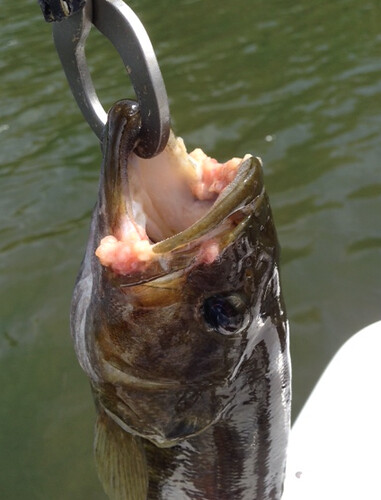
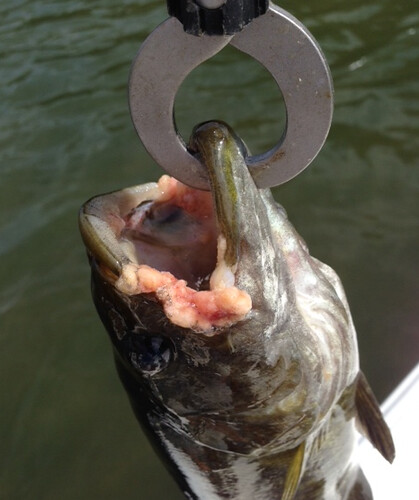
I also caught a fish with lesions all over its mouth (pictured). This was a 13" smallie and had plenty of fight in it. I was wondering what is the cause of the lesions? Any recommendations when catching fish like this?
DNR Response: The larger bass are more active than the juveniles at cooler water temperatures, generally from the mid-50s and cooler. Also, the mature bass are actively feeding during the prespawn period to secure energy and nutrients for the spawn and later aggressively defend their nests and brood. During the summer, the larger bass spread out in a variety of habitats remaining hidden near boulders and ledges when the sun is bright and the water is low and clear. They become more active during low light periods of dawn and dusk and also at night when madtoms (a small noctural member of the catfish family) are active.
The fish in the photo is most likely suffering from infections related to hooking injuries. Always try to remove hooks quickly with as little tissue damage as possible.